
Happy Friday! Each week, I post a simple article designed to inform and inspire you with business growth principles that work as you grow to your first $5M in revenue. And today, I'm going to talk about proof.
Proof is Marketing Factor #7 and is one of the easiest ways to improve your ability to attract and close the kind of discriminating clients you want to be working with, because good clients ask, "If they're so good... where's the proof?"
Marketing Factor™ #7: The Proof You Exhibit
The Proof You Exhibit are the elements woven throughout your offer, your messaging, and your overall marketing and sales which a) backs up the Promise and the claims made, b) justifies the Price, and c) aligns with what the Person expects to see or would be persuaded by.
Many business owners think about proof as simply being customer testimonials or case studies, which is a shame, because there's so much more proof than that. Even worse, many don't know how to apply proof strategically for specific purposes to make sure that their bases are covered across the entire Messaging Gap.
In this article, I aim to give you a very quick overview of categories of proof you can use in your marketing. Chances are, you're only using one type when you really need all six.
The six categories of proof are:
- Proof of Life
- Proof of Expertise
- Proof of Value
- Proof of Results
- Proof of Claims
- Proof of Alignment
Ready to dig in? Let's go.
Proof of Life
This first category, "Proof of Life," is very simple: are you showing that you are in business, are taking business seriously, and are going to be around for a while?
To show this, you'll employ what I call "trust indicators," which are elements like:
- Having a website with basic information: about page, FAQs, contact, services
- Having an email with your domain (vs gmail.com)
- Logo bars featuring past clients
- Better Business Bureau, Chamber of Commerce, or other membership badge
- Showcasing your business address and phone number on your website
Proof of Expertise
"Proof of expertise" are elements which show that Person can trust you to solve the Problem because you know what you're doing. Ideally, third parties are saying so. These could be certification and membership badges, partnership logos, client logos, "as seen in" logos, an expansive portfolio, third parties talking about results, conference speaking, years in business, a proven system, etc. Remember, these must be related to the rest of the Marketing Factors.
For example, here are some of mine from when I solely worked on marketing:


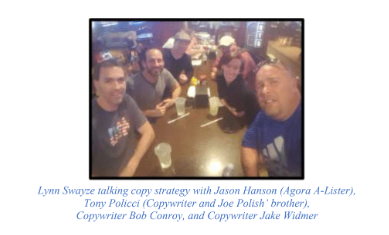
Being in the room where smart people are is another hidden type of "proof of expertise" . Here, I was working on a project with Jason Hanson of Spy Escape and Evasion.
Now, some of these you might care about, and some you might be like. . . what is this? If so, then it's a good reminder that. . .
The Proof of Expertise you use MUST match the Person (e.g., the buyer) you're trying to reach.
If I were to sell copywriting services to direct response publishers, then I would lean far heavier on the Digital Marketer certifications, my AWAI training, and my work in that area than I would if I were trying to reach IT Agencies in the B2B space. For those, I'd lean heavier on the HubSpot certifications and the fact I have years of agency work under my belt.
Remember: You have to use proof elements which actually align with the rest of your 12 Marketing Factors.
Proof of Value
"Proof of Value" are elements which reinforce the Price for the Product in relation to the pain of the Problem and the potential gain of the Promise. Proof of value should be quantified and with as much specificity as possible. Examples include metrics-based testimonials or claims (e.g., "5% increase in CTR!"), financial claims in the positive (money gained/saved), and even saved time. Your premiums and the "what you'll get" summaries also contribute to the proof of value. You can also use tangential benefits here as value, but they should be supported by the quantifiable.
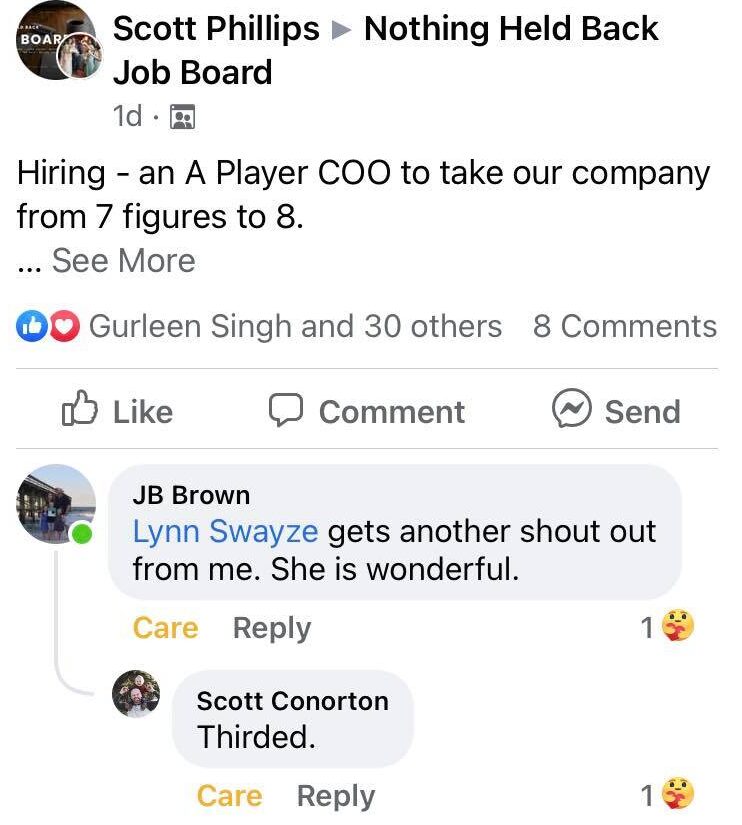
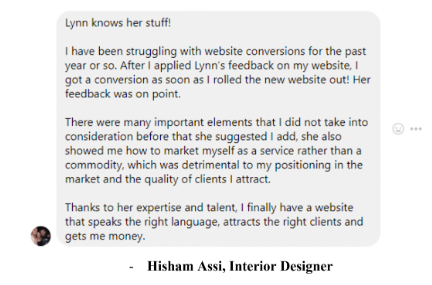
Note that these elements almost always have to be explained in copy. So I can reinforce with testimonials like this one:
But I would need to further explain how this impacted him compared to the investment in my services. Did he make $100? $1000? $10,000? $1,000,000 in new business? The testimonial doesn't say, and I don't want prospects to guess, so I would need to pull it out and really stack the value if I were to use this in copy for one of my offers.
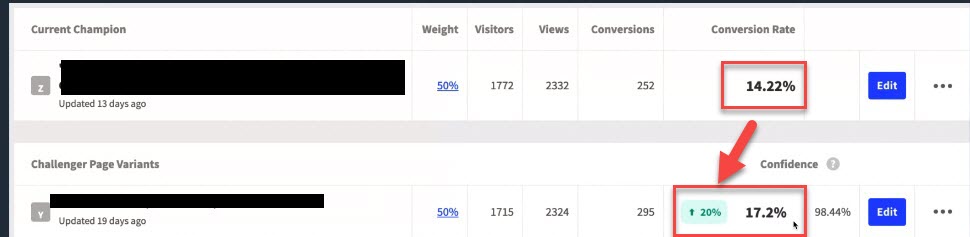
Same for the below. In this case, my top-of-fold changes did more to improve their conversions than all the "tests" this fancy CRO agency was able to accomplish:
Another area where proof of value is often missed is in the offer itself. One reason we stack bonus after bonus onto offers, even productized services like copywriting or agency help!, is to increase the value of the offer versus the investment they're going to make.
The total value of your entire offer presentation—the core offer, the premiums, the tangential benefits, all of it—has to balance out the monetary, time and effort cost, and risks of waiting.
If you come out in the black at the end of this algorithm, your offer will likely do well. If you don't, then you likely won't get too many takers.
The good news? We can engineer these elements to be in your favor.
Okay, on to the next one: proof of results.
Proof of Results
"Proof of results" are elements which show that your Product delivers on the Promise for Person.
Proof of results can be shown in testimonials and case studies, yes, but also in images, before/after stories, and through reports and graphs. These should always be results that align with the other factors and are what the Person actually wants.
So let's go back to that CRO test proof element:
If I were to use this proof to back up a claim that my copywriting leads to an over 2% increase in conversion on cold traffic, then this would work. I'd of course need to explain the proof and stack it with a LOT of other proof (so it's believable), but you get the point I think.
Same proof asset, different purposes. Got it?
Now on to the next: proof of claims.
Proof of Claims
"Proof of claims" are elements which back up the Prestige and other features/benefits of your Product. Elements that demonstrate results or how it works, testimonials, case studies, and customer feedback can, if built correctly, prove your claims. Third party research, third party quotes, and even other people's stories can also serve as proof of claims.
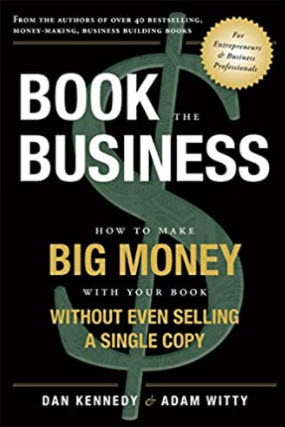
For example, let's say I wanted to sell book writing and marketing services for experts, and wanted to persuade the prospect that having a book is key to building an authority-based business.
I could have a proof of claim that's the following:
I could say,
"Hey look! Dan Kennedy always uses book funnels (just like XYZ offer!) to sell his services. It's worked so well, he even wrote a book about using books to sell services."
Or I could point to countless other experts you might know and aspire to be like, (again, this depends on who you're reaching!), and show how they used this very strategy to grow their business. For example, Kevin Rogers, who's known in the copywriting world, launched his 7-figure Copy Chief program off a quick, free book:
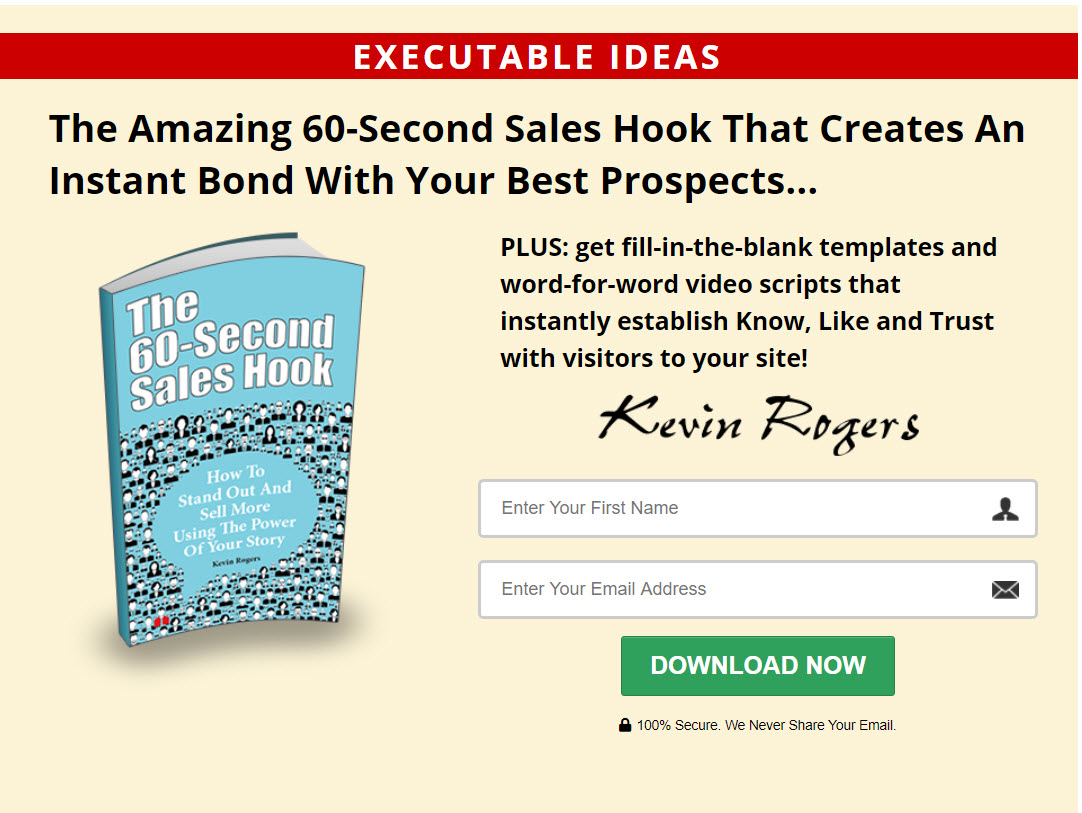
And I'd just keep reinforcing with different types of proof that research, data, anecdotes, other smart people all agree with me that books are a great way to grow your service business or agency.
See how easy that is? So you don't necessarily need to have your own results yet to grow your business. But once you do have them, you'll want to use them strategically and often until you have even more of them.
Now on to the next one, which isn't super powerful but which still moves the needle in the right markets: proof of alignment.
Proof of Alignment
"Proof of alignment" are elements which show Person that your Product is the right one for their Pain Points, Problem, and to get them the Promise they want. These elements often include affinity, where you show that you're just like them or understand them, such as being in the same industry or sharing business values.
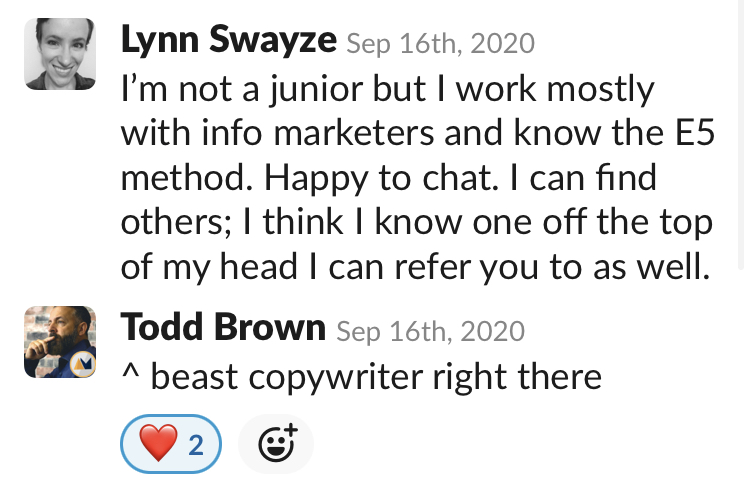
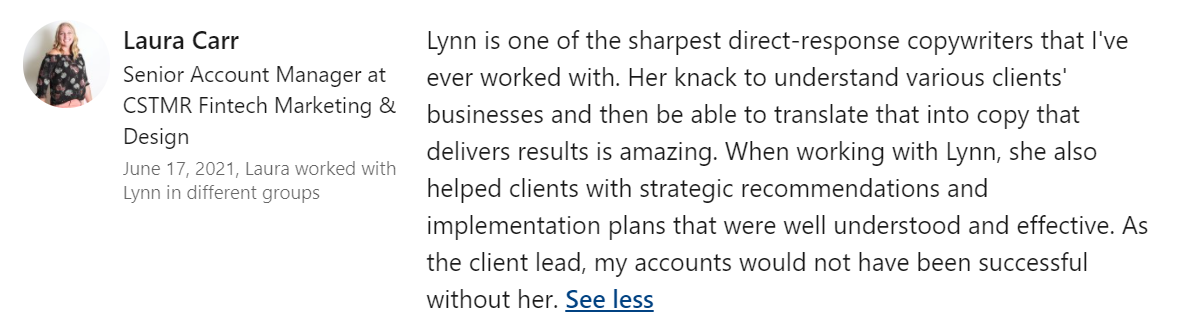
For example, if I were really going after direct response peeps as clients, I'd want to show you that even Todd Brown thinks I'm a great copywriter. If you like his politics, products, and persona, you might think more highly of me than if I posted a testimonial with someone more left-leaning and less direct response, like Laura on the right. (These are things you'll want to test and really make sure you have your Sophistication Stage-based avatars nailed down, something I cover in the July 2026 Business Success Library.)
In Conclusion
I hope that thinking about why you're using proof helps you come up with new ways to boost your marketing results this year, especially as we head into what's likely to be a recession if not an outright depression. Every little bit of bolstering you can do helps.
Here's places you can have your team strategically add proof:
- Your website homepage
- Your website about page
- In a Blog post talking about proof 🙂 (see what I did there?)
- Your website's cart checkout page
- Your website's service or sales page
- Your website's book a call page (this should be a WALL OF PROOF!)
- Your website's "proof" page
- In your social media as part of your content mix
- On a social media cover/banner
- In an info kit you provide to potential clients/customers
- On your business card
- On conference banners
- In your presentation/seminar/webinar slide deck
And remember, each month I talk about business growth concepts in depth for small services-based businesses growing to $5M/year. You can learn more and gain access to the library here.